
A well-designed boat interior should make every trip more enjoyable, whether the vessel is used for fishing, family outings, or weekend cruising. Seating plays a major role in that experience because passengers need enough support, space, and freedom to move safely. Choosing suitable boat seat materials is an important part of the process, but the overall result also depends on thoughtful design and professional installation. Specialists such as Boat Upholstery Fort Lauderdale can help boat owners create seating that combines practical performance with an attractive appearance.
Seating Design Starts With the Boat’s Purpose
Not every boat needs the same seating arrangement. A fishing boat usually requires practical seats that leave enough deck space for equipment and movement. A family cruiser may benefit from wider benches, comfortable backrests, and additional cushions. Meanwhile, a performance boat often needs compact seating that keeps passengers properly positioned while underway.
These differences should influence the choice of boat seat materials from the beginning. A fishing vessel may benefit from durable, easy-to-clean surfaces, while a recreational cruiser might place greater emphasis on texture, color, and cushioning. Matching upholstery to the boat’s intended use helps prevent design decisions that look attractive but prove inconvenient during regular trips.
Why Ergonomics Matter on the Water
Comfort involves more than choosing soft cushions. Seat depth, backrest angle, lumbar support, and overall height can affect how passengers feel after spending several hours onboard. A poorly shaped seat may create pressure points or encourage an uncomfortable posture.
Helm seating deserves particular attention. The operator needs a stable position, a clear view of the surroundings, and comfortable access to steering and other controls. Passenger seats should also provide appropriate support without restricting movement around the deck.
When upgrading boat seat materials, owners should consider how the upholstery will work with the seat’s shape. High-quality coverings can improve the finished appearance, but they cannot correct an unsuitable seat structure. In some cases, reshaping the foam or adjusting the cushion profile can make a noticeable difference.
The Role of Foam in Everyday Comfort
Foam is one of the most important components of marine seating. It supports the body, maintains the cushion’s shape, and influences how the seat feels during longer journeys. Foam that is too soft may compress quickly, while an excessively firm cushion can make extended trips uncomfortable.
The right solution depends on the seating position and intended use. Helm seats may require firmer support, while lounge areas can use a different cushioning approach. Some designs also combine foam layers to balance support and comfort.
Moisture management matters just as much. Marine cushions can encounter rain, splashes, humidity, and wet clothing. Therefore, boat seat materials should be selected as part of a complete upholstery system that considers the foam, cover, seams, and ventilation.
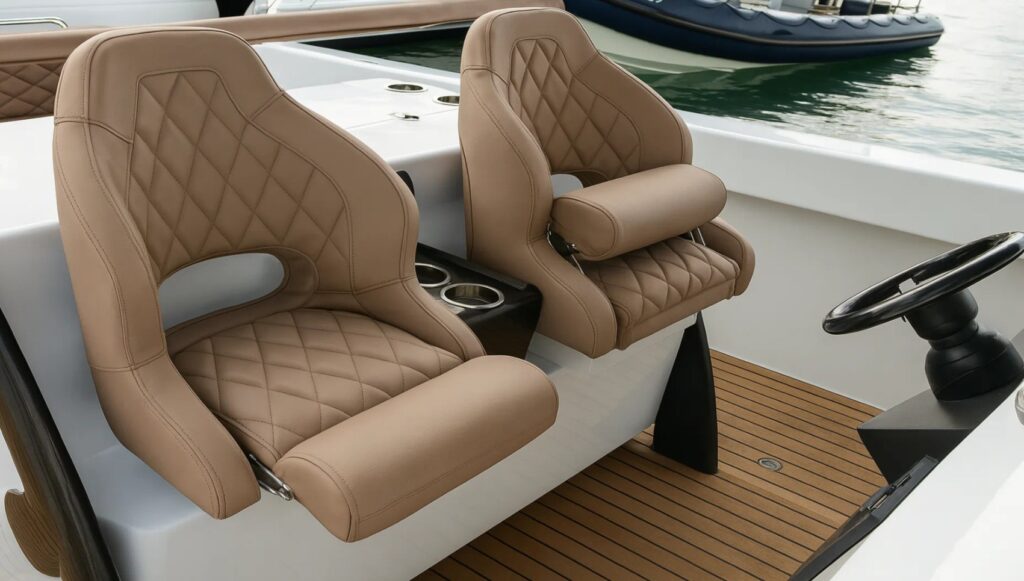
Smart Layouts Make Limited Space More Useful
Boat interiors have to accommodate several activities within a relatively small area. Passengers may want to relax, eat, socialize, or move between the cockpit and bow. A seating arrangement that works well for one activity may become inconvenient during another.
Thoughtful layouts can make better use of the available space. Corner benches, removable cushions, folding backrests, and convertible seating can provide flexibility without making the deck feel crowded. Owners should also consider access to storage compartments, walkways, and essential equipment.
The upholstery design should support these practical features. For example, removable cushions need secure positioning, while frequently used folding sections require durable seams and suitable construction. Selecting boat seat materials with these details in mind can help maintain both appearance and everyday functionality.
Color and Texture Influence the Interior Atmosphere
Upholstery is also an important part of a boat’s visual identity. Colors can complement the hull, flooring, dashboard, and other interior finishes. Neutral shades often create a clean and understated look, while contrasting panels or decorative stitching can give seating a more distinctive character.
Texture deserves equal consideration. Smooth surfaces are generally straightforward to wipe clean, while certain woven fabrics create a softer visual impression. Owners should compare samples in natural light because colors can look different under direct sunlight than they do indoors.
The best boat seat materials balance appearance with practical requirements. A stylish finish should also be appropriate for the seating location, expected exposure, and frequency of use.
Maintenance Helps Preserve the Finished Result
Even carefully selected upholstery needs regular attention. Dirt, sunscreen, food residue, and moisture can gradually affect seating surfaces. Cleaning spills promptly and following the manufacturer’s care instructions can help prevent avoidable damage.
Owners should periodically inspect the upholstery for loose seams, small cracks, compressed cushions, and changes in surface texture. Addressing minor problems early may prevent more extensive repairs later.
A few simple habits can make maintenance easier:
- Clean seating with products approved for the specific upholstery.
- Rinse away salt deposits after coastal trips.
- Let cushions dry before covering or storing them.
- Avoid sharp objects that may puncture or scratch the surface.
- Check seams and attachment points as part of routine boat inspections.
These steps help boat seat materials remain functional and attractive through regular use.
Build a Seating Area Around Real Needs
A successful marine interior brings several elements together. The seat structure must provide appropriate support, the layout should allow practical movement, and the upholstery must suit the environment. Focusing on only one of these elements can lead to a result that looks good but does not perform as expected.
Before starting an upholstery project, consider who regularly uses the boat, how long typical trips last, and which seating areas experience the most activity. These details provide a useful foundation for selecting materials, planning cushion shapes, and deciding where customization will make the greatest difference.
With the right combination of design and construction, boat seating can become one of the most comfortable and functional features of the vessel.