Boat owners often focus on engines, electronics, and hull maintenance, but the interior deserves equal attention. Seating can experience constant pressure, direct sunlight, water, dirt, and frequent cleaning throughout the boating season. Choosing the right boat upholstery material can help protect these surfaces while making the interior more comfortable and attractive. Boat Upholstery Broward specializes in professional upholstery for boats and yachts, providing custom solutions for different marine interiors.
Start With How You Use the Boat
The best upholstery choice depends on the boat’s purpose.
A vessel used primarily for fishing has different requirements from a cruiser designed for weekend trips. A family boat may need materials that tolerate frequent spills, while an offshore vessel may require additional resistance to sunlight and saltwater.
Before choosing a boat upholstery material, consider the vessel’s typical activities.
Ask:
- How often is the boat used?
- Is it operated in freshwater or saltwater?
- How much sunlight reaches the seating?
- Do passengers spend several hours onboard?
- Does the boat remain outdoors between trips?
These questions can make the selection process much easier.
Fishing Boats Need Practical Surfaces
Fishing can be particularly demanding on marine seating.
Water, bait, fish residue, tackle, and wet clothing can all come into contact with cushions. Easy cleaning and resistance to everyday abrasion therefore become important considerations.
A durable boat upholstery material can make regular cleanup easier while helping seating withstand frequent use.
Simple colors and practical textures may also be preferable for boats where functionality takes priority over decorative design.
Family Boats Need Versatility
Family boating creates a different set of challenges.
Children and adults may use the same seating throughout the day. Food, drinks, sunscreen, and wet clothing can all affect the interior.
For these vessels, owners may benefit from materials that combine durability with easy maintenance.
Comfort also matters because family outings often involve long periods of sitting.
A suitable boat upholstery material can provide a practical surface while helping the interior remain comfortable for everyone onboard.
Offshore Boats Face Tough Conditions
Offshore vessels encounter intense marine exposure.
Saltwater spray, strong sunlight, wind, and changing weather can affect seating materials quickly. Helm and cockpit areas may experience especially high levels of exposure.
Owners should prioritize UV resistance and moisture resistance when selecting materials for these locations.
Protective covers can provide additional help when the boat remains unused.
Cruisers Put Comfort First
Cruising often means spending several hours onboard.
Passengers may move between seating areas, relax in the cockpit, or remain seated during longer journeys. Cushion construction becomes particularly important in these circumstances.
If old foam has become compressed, replacing the exterior covering alone may not solve the problem.
A complete upholstery project can include new foam, improved cushion contours, and a durable boat upholstery material selected for the intended use.
Consider the Seating Location
A single boat can contain several different environments.
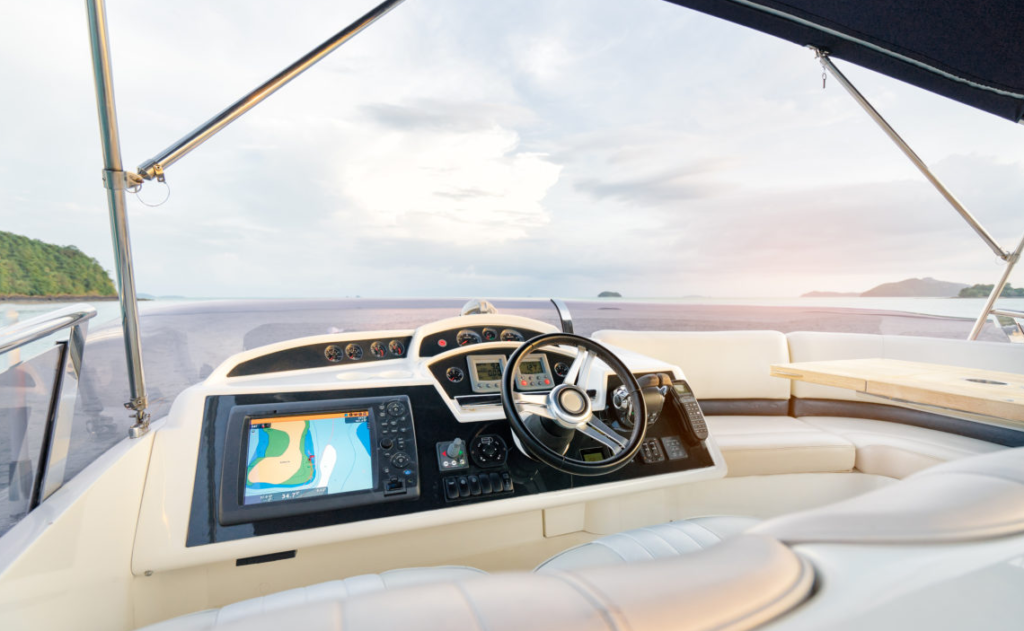
The helm receives constant use. Bow cushions may receive direct sunlight and spray. Cabin seating may remain protected from most weather but still experience humidity.
This means owners should evaluate each area separately.
The ideal boat upholstery material for an exposed helm may not be the same choice for protected interior seating.
Color Can Influence the Interior
Color affects the visual character of a boat.
Light colors can create an open and bright appearance, while darker shades can provide contrast and definition. Many owners combine both approaches to create a balanced interior.
Popular combinations include:
- White with navy
- Gray with black
- Cream with blue
- Beige with charcoal
- Light gray with darker piping
A carefully selected boat upholstery material can support these combinations while providing the performance required for marine use.
Texture Adds More Than Style
Texture can influence both appearance and everyday use.
Subtle textured finishes can create visual depth and help disguise minor marks. Smooth surfaces can provide a cleaner and more minimalist appearance.
The right choice depends on the boat’s design and how frequently the seating needs cleaning.
Inspect the Foam Before Reupholstering
Visible damage does not always tell the whole story.
A cushion may have cracked material while the foam remains usable. In other cases, the exterior may look acceptable while the foam underneath has lost its resilience.
Inspecting both components can help owners avoid unnecessary work and identify problems that require attention.
A successful boat upholstery material upgrade should support the entire seating structure.
Protect the Interior After Installation
New upholstery still needs protection.
Regular cleaning can remove salt, dirt, sunscreen, and other contaminants before they accumulate. Wet cushions should dry completely before storage.
Owners can also:
- Use fitted covers
- Avoid leaving sharp equipment on cushions
- Wipe seating after trips
- Remove spills quickly
- Inspect seams regularly
- Maintain proper ventilation
These simple habits can extend the life of the finished interior.
Know When Restoration Is Worthwhile
A boat does not necessarily need replacement simply because its interior looks old.
If the hull, engine, and other major systems remain in good condition, restoring the seating can provide a practical way to refresh the vessel.
Replacing damaged upholstery, updating foam, and choosing a modern boat upholstery material can make an older boat feel considerably newer.
Final Thoughts
Marine seating has to balance comfort, appearance, and durability. The best upholstery choice depends on the type of boat, its environment, and the activities that take place onboard.
A carefully selected boat upholstery material can help protect seating from sunlight, moisture, salt, and everyday wear. Combined with quality cushioning, professional installation, and regular maintenance, it can help boat owners enjoy a cleaner, more comfortable, and longer-lasting interior.